 Bioluminescence Holbox
Home › Guides › Bioluminescent Plankton: What Makes Holbox Bioluminescence Glow?
Bioluminescent Plankton: What Makes Holbox Bioluminescence Glow?
Bioluminescent plankton does not glow by itself. It flashes a bluish-green cold light when disturbed, and the darkest Holbox nights are around the new moon on 8 December 2026.
Quick answer What the glow is and how to see it in Holbox
Bioluminescent plankton does not glow all the time. It makes a bluish-green cold light only when disturbed, and fewer than 20% of that light is heat. On Holbox you see it on dark nights, with glow tours from $24 per person.
Key takeaways
- The glow is light from a chemical reaction in a living organism, so a paddle stroke or a swimmer sets it off. Try the Bioluminescence Kayaking and Stargazing tour at $41.
- Lights hide the glow, so tours ask you to keep flashlights and flash photography away. See the Bioluminescence Experience in Holbox swim at $39.82.
- Dark nights fall around the new moon, 8 December 2026 and 7 January 2027. Browse holbox bioluminescence tours by date.
- Punta Mosquito is a protected preservation subzone, so tours stay on the sandbars nearby. Ask the operator where your tour goes.
What is bioluminescent plankton?
It is plankton that makes its own light through a chemical reaction, and on Holbox the glow comes from tiny organisms in the water, not from the water itself.
Bioluminescence is the production and emission of light by a living organism, using energy released by a chemical reaction.
A cold light from a chemical reaction
NOAA describes bioluminescence as light produced by a chemical reaction inside, or ejected by, a living organism. In most cases the reaction involves a substrate called luciferin and an enzyme called luciferase. National Geographic notes that it is a cold light, with less than 20% of the light generating thermal radiation.
The organisms that cause the sparkle on the sea surface are dinoflagellates, a type of plankton that can make the ocean surface sparkle at night. Most bioluminescent organisms live in the ocean and almost none are native to freshwater habitats. That is why a glow tour in the sea is a different experience from a pond or a river.
| Question | Answer | Source |
|---|---|---|
| What makes the light? | A reaction between an enzyme and a substrate, usually luciferin and luciferase | NOAA and Wikipedia |
| Is it heat? | No. Less than 20% of the light is thermal radiation | National Geographic |
| Which plankton? | Dinoflagellates | National Geographic |
| Where do these organisms live? | Mostly in the ocean, almost none in freshwater | National Geographic |
Source: NOAA.
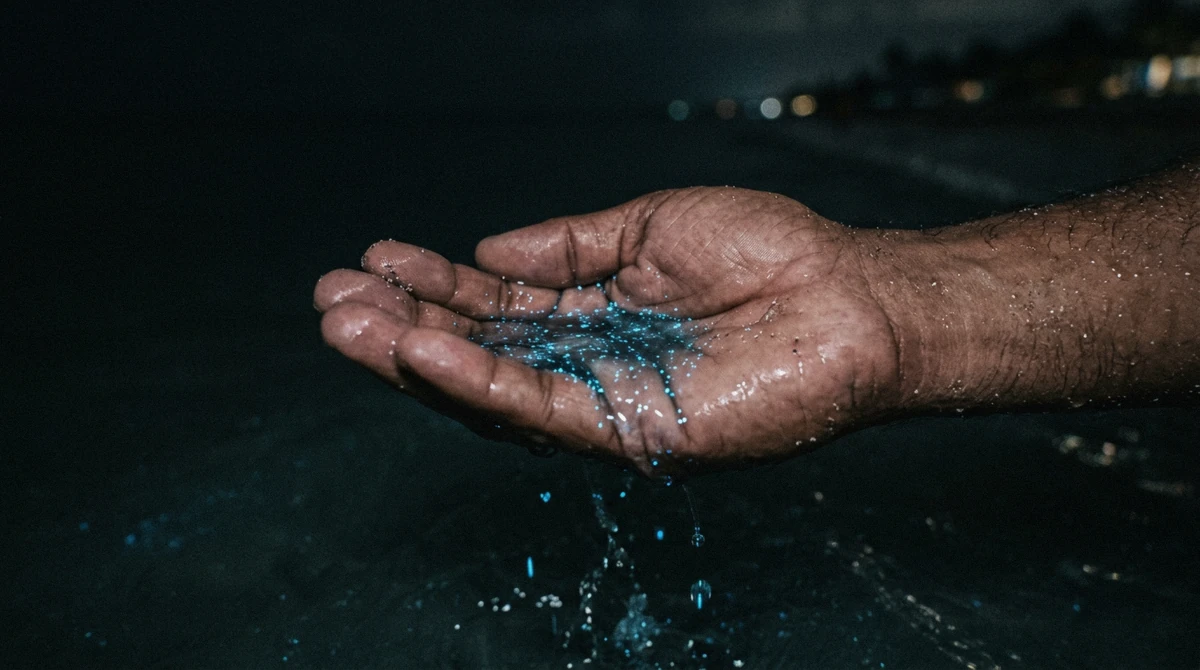
Seawater lit by plankton, seen in the palm of a hand.
Why does bioluminescent plankton glow only when you move the water?
Dinoflagellates produce light when disturbed, and the flash works as a defence against predators.
The most common wrong belief is that the sea glows by itself. It does not.
Disturbance is the trigger
Bioluminescence is used to evade predators and acts as a defence mechanism in dinoflagellates, which produce light when disturbed. NOAA lists three typical functions across marine life: warning or evading predators, luring or detecting prey, and communication within a species.
For a traveller this means the glow follows your hands, your paddle and your kicks. On a still, undisturbed lagoon you may see little. The tours are built around movement for this reason. The Eco Adventure Holbox glow kayak includes a swim in the glow, and the Bioluminescence Experience in Holbox swim gives you a long wetsuit, water shoes, a mosquito mask and a snorkel mask.
Source: NOAA.
Why is the glow blue-green?
Marine bioluminescence is usually blue because blue light travels best through water, and dinoflagellates glow a bluish-green.
Expect blue-green, not white or red.
The color you will see
All bioluminescent organisms make light with a reaction between an enzyme and a substrate. Marine bioluminescence is usually blue, and it can range from nearly violet to green-yellow. National Geographic says dinoflagellates bioluminesce in a bluish-green color.
Many types of bioluminescence cannot be seen under ordinary light. That is why every glow tour on this site happens after dark and why the darkest nights give the best view.
Source: NOAA Ocean Exploration.
Where do you find bioluminescent plankton?
Most bioluminescent organisms live in the ocean, and dinoflagellate ecosystems are rare, mostly forming in warm-water lagoons with narrow openings to the open sea.
A narrow opening keeps the plankton in. That is the pattern behind the world's few reliable glow sites.
Why such places are rare
Bioluminescent dinoflagellate ecosystems mostly form in warm-water lagoons with narrow openings to the open sea, where the narrow opening prevents the plankton from escaping. National Geographic lists the brightest bioluminescent tides as a travel topic, because few places have the right conditions.
This guide covers Holbox only. It does not rank other countries. If you ask where in the US you can see bioluminescent plankton, the sources behind this guide do not rank US sites, so look at the operator listings for a specific place and do not rely on a general list.
Where you see it on Holbox
The listed glow tours go to the sandbars near Punta Mosquito, the Punta Cocos shore and Punta Siricote. The Can-Am Glow Ride goes to a dark beach by Can-Am, and the Kayak Scouts Golf Cart Glow goes to Punta Cocos bay. Pick by how you want to travel, as the glow itself is the same plankton.
Tours That Fit
Two ways in: a guided kayak and a wetsuit swim.
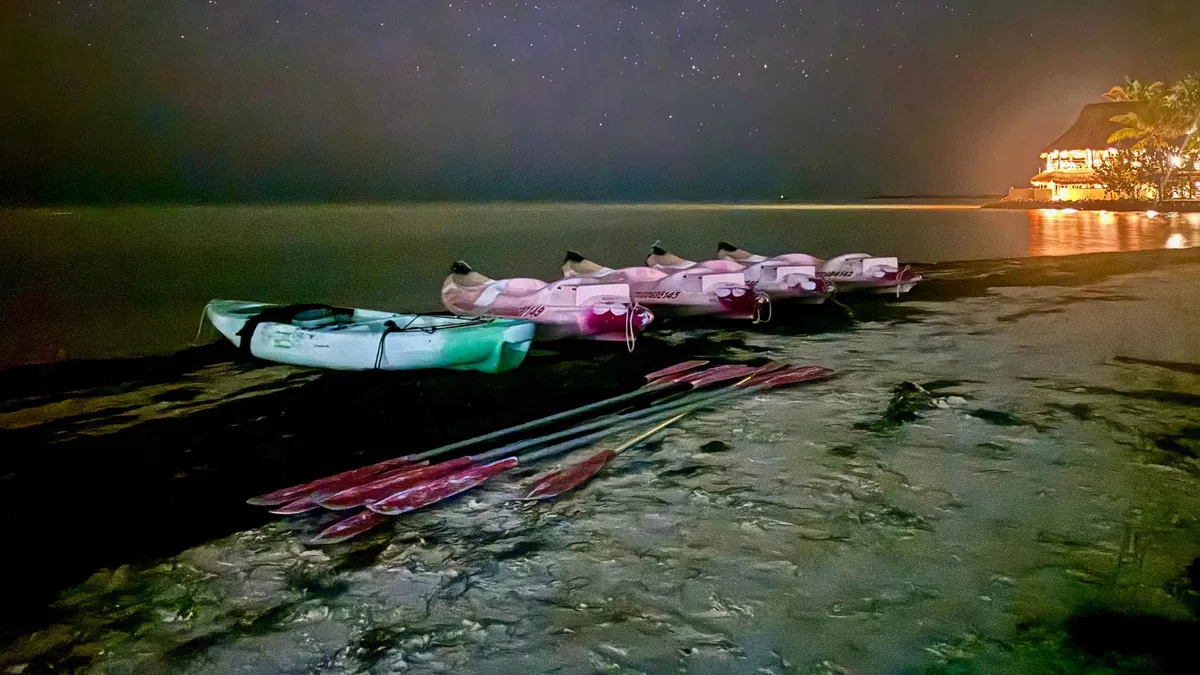 from $41
Most booked glow tour
Bioluminescence Kayaking and Stargazing
Paddle to the sandbars near Punta Mosquito, then walk and swim in the glow, with hotel pickup by 4x4.
Check Availability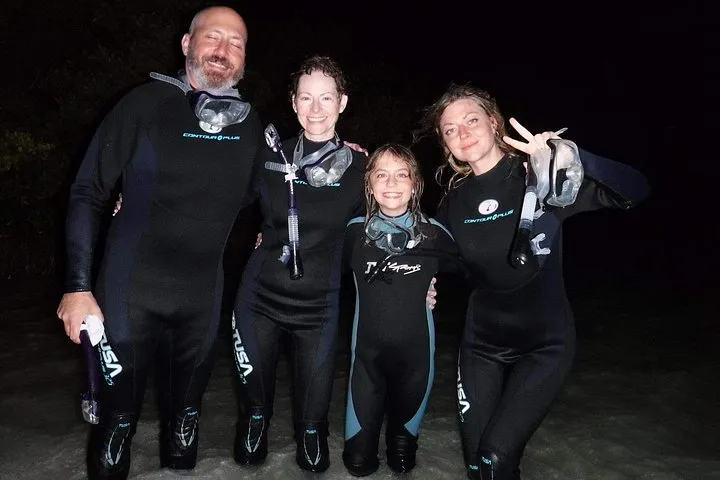 from $39.82
Glow or new date
Bioluminescence Experience in Holbox
Offers a reschedule or refund if no glow is seen, with wetsuit and snorkel mask included.
Check AvailabilityWhy can't you swim in bioluminescent water?
You can swim on the Holbox tours, because the listings include a swim, but a few rules apply and a bloom itself is not automatically harmful.
The idea that you cannot swim comes from fear of red tides.
What a bloom is
A red tide is a common name for a harmful algal bloom. NOAA says not all algal blooms are harmful, most are beneficial as food for ocean animals, and only a small percentage of algae produce toxins. A glow is not the same thing as a harmful bloom, but no listing can promise a given night is safe, so follow the guide's instructions.
On Holbox the swim is part of the product. The Bioluminescence Kayaking and Stargazing price covers life jackets and a swim in the glow. The Bioluminescence Experience in Holbox operator lists a guarantee of minor medical expenses up to five thousand pesos and adequate sanitation methods, and gives a new date or a refund if the glow is not visible.
| Tour | Price | Swim | Notes |
|---|---|---|---|
| Bioluminescence Kayaking and Stargazing | $41 | Swim in the glow | Life jackets included, mosquito repellent not included |
| Bioluminescence Experience in Holbox | $39.82 | Guided night swim | Long wetsuit, water shoes, mosquito mask and snorkel mask included |
Source: NOAA.
Is bioluminescence safe to touch?
The light is a cold light from a chemical reaction, but touching marine life is banned on some tours, so follow your guide.
The glow comes from living organisms, so treat it like wildlife and not like a toy.
What the facts support
The facts say bioluminescence is light from a chemical reaction in living organisms, and that most bioluminescence is a cold light. They do not say it is safe to handle any organism. The Eco Adventure Holbox sunset mangrove listing says not to touch marine life or plants. Treat that as the default rule on any night tour and ask your operator if you are unsure.
Keep your hands in the water only as the guide shows you. Do not scoop water into containers or bring home samples.
Source: NOAA.
Do flashlights ruin the glow?
Yes.
Lights hide the glow, and in the Punta Mosquito protected area they are also restricted.
The rule behind the rule
NOAA Ocean Exploration says bright lights make mobile bioluminescent animals move away. The Kayaking Holbox Stars and Glow listing bans flashlights, the Eco Adventure Holbox kayak bans flash photography, and the Can-Am listing recommends only swimwear and a towel because the beach is dark.
Punta Mosquito is a federal preservation subzone of the Yum Balam protected area, about 2.5 km long and 76.1358 ha. Recreational tourism is not on the list of activities the 2018 management programme permits there, and lighting fires or using flashlights on the beach is banned during the sea turtle nesting season. Tours go to the sandbars near the point. Eco Adventure Holbox says it does not enter the protected point. Across the protected area, lamps aimed at the federal beach zone are not permitted, and short-wavelength amber light is preferred in the nesting season.
Sources: NOAA Ocean Exploration, Diario Oficial de la Federación.
Which nights give the best view of the glow?
The darkest nights are around the new moon, and the next dates are 8 December 2026 and 7 January 2027.
A bright moon competes with a faint glow, so use the moon calendar.
New moon and full moon
New moon dates in Holbox time are 9 Nov 2026, 8 Dec 2026, 7 Jan 2027, 6 Feb 2027, 8 Mar 2027, 6 Apr 2027 and 6 May 2027. Full moon dates are 24 Nov 2026, 23 Dec 2026, 22 Jan 2027 and 20 Feb 2027. On 8 December 2026 the moon sets at 17:48, before the 18:07 sunset. The Xtreme Holbox Glow Kayak runs no tour on the full moon, and the Kayak Scouts golf cart tour confirms its time by WhatsApp because of the moon calendar.
Eco Adventure Holbox says the glow runs at 70 to 100 percent from May to September and at 30 to 80 percent the rest of the year. That is the operator's own figure. See the holbox bioluminescence tours for the full list.
Sources: U.S. Naval Observatory, U.S. Naval Observatory.
Bioluminescent Plankton FAQ
Is bioluminescent plankton the same as red tide?
No. NOAA says a red tide is a common name for a harmful algal bloom, and most blooms are not harmful. See the Bioluminescence Experience in Holbox swim for what a Holbox glow swim includes.
Can you buy bioluminescent plankton?
PyroFarms sells living glowing algae that glow in 2 to 3 nights with a live arrival guarantee, but that is a home product and not the sea glow. For the real thing, see holbox bioluminescence.
Is the glow a heat reaction?
No. National Geographic says it is a cold light, with less than 20% of the light generating thermal radiation. See the Bioluminescence Kayaking and Stargazing tour.
What colour is the glow?
Bluish-green. Marine bioluminescence is usually blue because blue light travels best through water. See the Kayaking Holbox Stars and Glow tour.
More Guides
- Can You See Bioluminescence in Cancun? Why Holbox Is the Night Trip
Bioluminescence Cancun 2027: night snorkel or Holbox glow tour? Compare 6 factors, ferry times and moon dates. Check availability.
- Holbox at Night: Bioluminescence, Stars and the Village After Dark
Holbox at night 2027: glow tours, moon dates and evening plans for dark skies. Compare and check availability.
- Holbox Bioluminescence Golf Cart Tour: Glow From the Beach, No Kayak
Compare Holbox golf cart and beach glow tours for 2027: from 1 hour 15 minutes, moon dates and pickup. Check availability today.